The Japanese art of finding beauty in impermanence, imperfection and the quietly unfinished
Wabi-sabi is a Japanese philosophy and aesthetic rooted in the acceptance of impermanence, imperfection and incompleteness. It is one of the most quietly profound concepts in Japanese culture and offers a fundamentally different way of seeing and being in the world.
The term combines two separate ideas. Wabi originally referred to the loneliness and simplicity of living in nature, away from society, it came to mean a kind of quiet, rustic beauty found in simplicity. Sabi referred to the passage of time and the changes it brings, the beauty of things that are aged, weathered or worn. Together they describe an aesthetic and a world view that finds beauty precisely where Western culture often sees flaw or decay.
At its heart wabi-sabi rests on three simple truths drawn from Buddhist thought:
Nothing is permanent — all things are transient and passing
Nothing is finished — everything is in a state of becoming
Nothing is perfect — incompleteness is the natural state of things
Rather than striving against these truths, wabi-sabi invites us to rest in them, to find beauty not despite impermanence and imperfection but because of it.
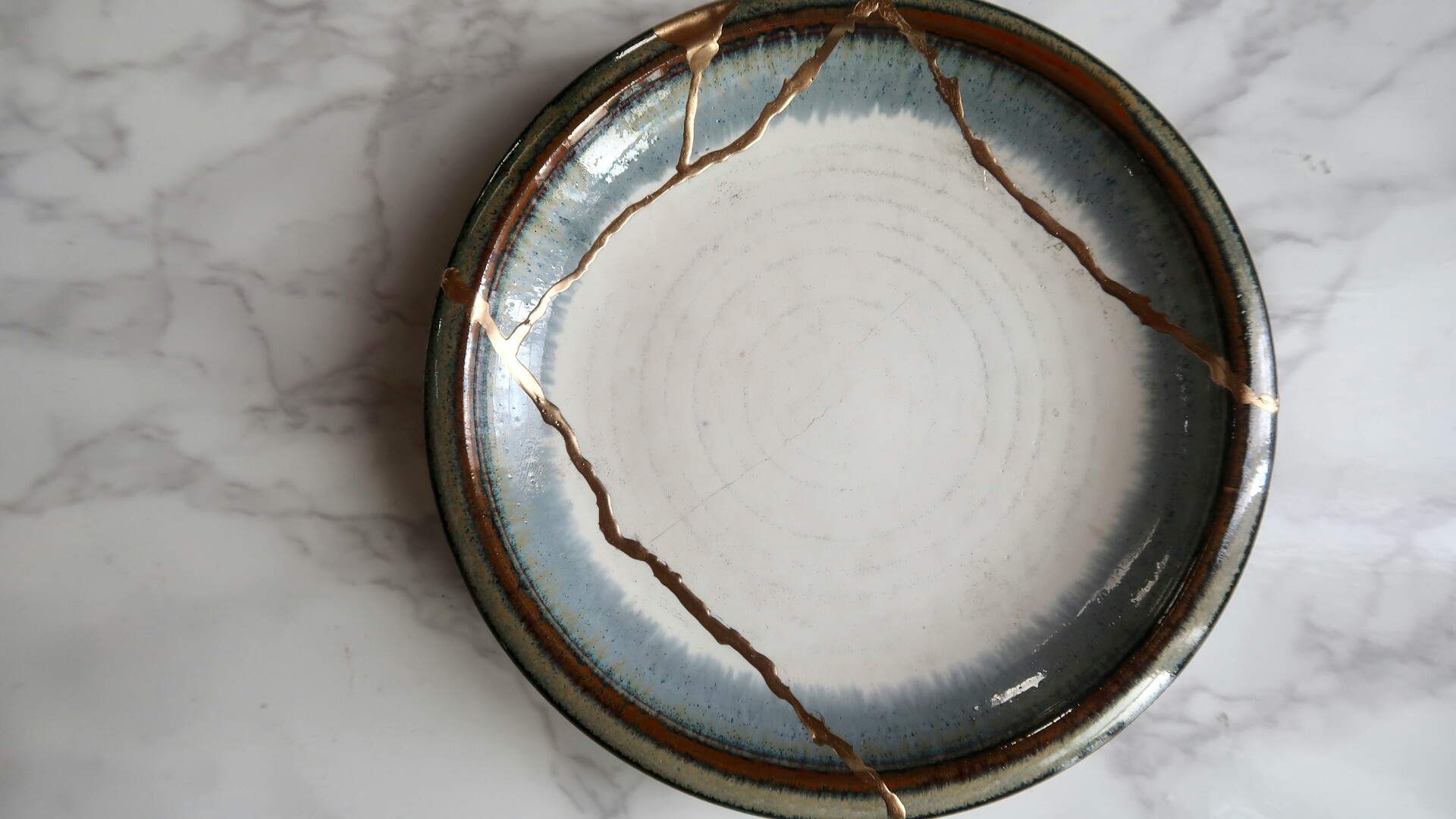
Wabi-sabi shows up in many forms. In Japanese ceramics, the practice of kintsugi, repairing broken pottery with gold, is perhaps its most famous expression. Rather than hiding the crack, the gold highlights it. The breakage becomes part of the object's history and beauty. In architecture it appears in weathered wood, moss-covered stone and asymmetric forms. In gardens it is the fallen leaf left where it lands, the irregular path, the space that is deliberately left empty.
Wabi-sabi has profound relevance for mental health and the therapeutic space. In a culture that relentlessly pursues perfection, productivity and the erasure of difficulty, wabi-sabi offers a radical alternative, that our cracks, our struggles, our unfinished edges are not things to be fixed or hidden but are in fact where our depth, our character and our humanity live.
It speaks directly to themes of self-compassion, acceptance and the therapeutic journey itself, which is rarely linear, never perfect, and always unfinished. It honours the beauty of the process over the destination.
It also connects beautifully to concepts like:
Impermanence — nothing, including pain, is permanent
Self-compassion — meeting yourself with gentleness rather than judgement
Authenticity — the worn, the real and the imperfect as more truthful than the polished
Presence — slowing down enough to notice what is quietly beautiful in the ordinary
To live with a wabi-sabi sensibility is to slow down, to notice, to release the pursuit of perfect and instead find meaning in what is real, worn, simple and true. It is to look at a scar and see a story. To look at an autumn leaf and see not death but completion. To look at yourself — unfinished, imperfect, in process, and find that beautiful.